Caitlin Clark Got Mocked in Her Own Face — Then She Dropped Buried Chicago Alive
Caitlin Clark Got Mocked in Her Own Face — Then She Dropped Buried Chicago Alive
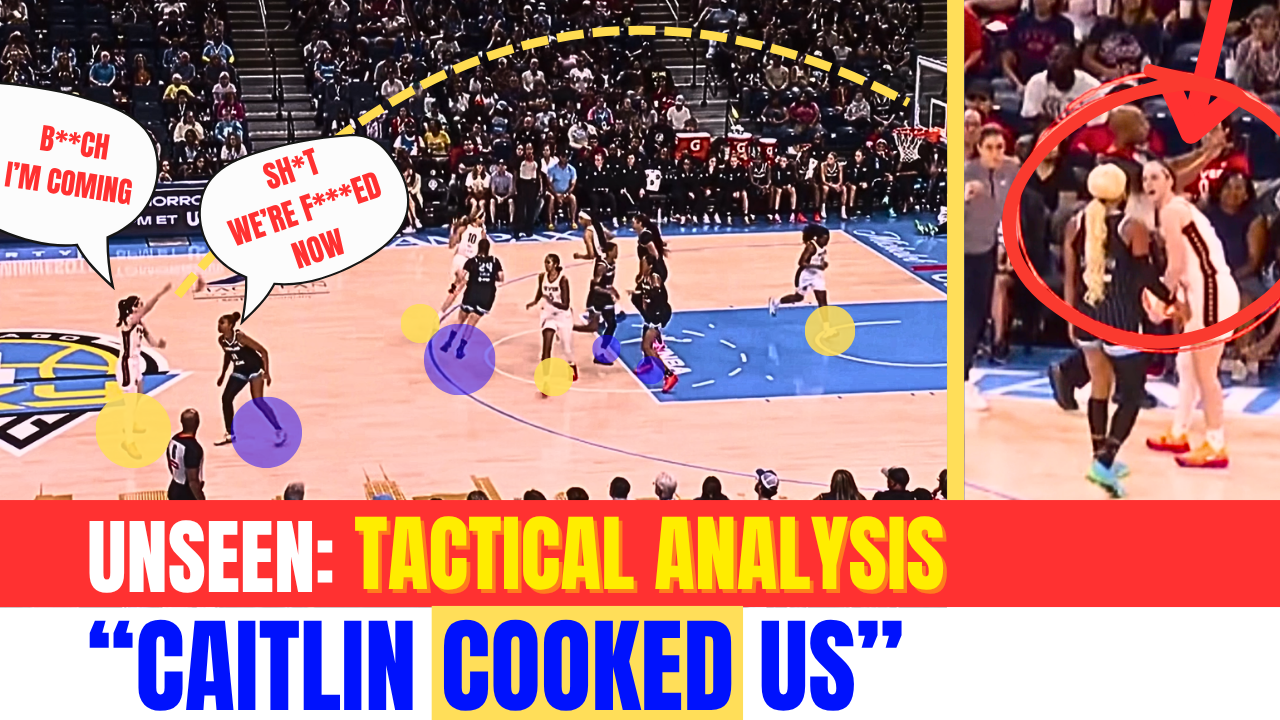
There are nights when a basketball game is just a basketball game, and there are nights when a single gesture turns the building into a courtroom. Chicago was supposed to be the second kind of night the moment DiJonai Carrington put her hands up, flopped for the cameras, and accused Caitlin Clark of selling contact right in front of a referee. It was cheap. It was loud. It was meant to get under the skin of the most watched player in the sport.
Clark did not take the bait.
She took the gym.
By the time the Indiana Fever walked out of Chicago with a 113-90 demolition, the mockery had been reduced to a footnote and the box score had become the only argument that still mattered. Thirty-seven points. Ten assists. Eight three-pointers. A career high from deep. Kelsey Mitchell adding 30 of her own. The Sky eliminated from playoff contention. And Carrington, the player who had tried to make the night personal, watching the league’s most dangerous guard turn a rivalry game into a public correction.
This is the story of how that night unfolded, why the first possession already told you what was coming, and why the Fever’s two-game losing streak did not survive contact with a version of Clark that looked, finally, like herself again.
Indiana did not arrive in Chicago carrying momentum. The Fever had dropped two straight, including a bruising night against Dallas that left the same old questions hanging in the air. Was the offense stalling again. Was Clark’s rhythm gone. Was this the slide people always wait for when a star has spent a season living under a microscope. Those questions are never innocent around Clark. They travel with her from city to city. They sit in the first row. They wait for a cold shooting night so they can pretend a career is a referendum.
Clark answered before the first media timeout.
Right after the tip she gathered the ball, used a screen, and did the thing that still separates her from almost every other guard in the league. She did not panic when Chicago closed. She did not force a hero shot. She slipped the ball inside to Makayla Timpson and Indiana was on the board with her first assist. It was a small play. It was also a declaration. The Fever were not going to spend the night arguing with Chicago’s physicality. They were going to make Chicago choose.
Chicago chose wrong.
The Sky gave Clark a sliver of space on the next trip and she pulled up from deep without hesitation. The three went down clean. After two straight losses, that is the kind of make that changes a locker room’s breathing. It is also the kind of make that forces a defense to creep out farther than it wants to creep. Clark immediately used that extra respect. She attacked downhill instead of settling, finished the layup, and suddenly Chicago had two problems instead of one. If they sagged, she shot. If they ran her off the line, she put the ball on the floor and scored at the rim or found the cutter.
That is the poison. That is the entire scouting report in one sentence. And she kept pouring it.
She drew the defense again and hit Timpson for another easy finish. Then she buried a second three. Eight points already. The shot that had looked tight against Dallas was suddenly a weapon again. She was locked in the way she gets locked in when the game stops feeling like a debate and starts feeling like a toy she has owned since she was a kid in Des Moines pulling up from the free-throw line on a six-foot hoop.
Then Chicago brought Carrington into the game.
On paper it was a substitution. On the floor it was a change in temperature. The physicality that had been simmering became personal. Carrington bumped Clark near the top of the floor, got whistled for the foul, and immediately went into the flop gesture in front of the official. The message was not complicated. She wanted the building, the referee, and the cameras to believe Clark was hunting contact instead of playing basketball.
Clark said something back. Of course she did. She has never been a statue. The fire is part of the product. But she did not stay in the argument. She isolated Carrington on the next possession, created just enough space with a step-back, and drilled the three right over her. Then, as they went the other way, Carrington bumped her again and Clark waved her off like a person who had already decided the conversation was over.
That wave is the clip people will keep. The basketball that followed is the part that actually ended the night.
Clark did not turn the game into a one-on-one grudge match. That is what average stars do when they get touched. They hunt their own shot until the offense dies. Clark came back down, pulled Chicago’s defense toward her, and found the cutter — Billings this time — for an easy finish. Even after the drama, she was still running the Fever’s offense like a point guard who understands that revenge is more complete when your teammates eat too.
She attacked the paint again, got the defender leaning, and floated the ball off the glass. Chicago could not decide whether to protect the arc or the rim. Then she produced one of the nastiest passes of the night: she held the ball just long enough for Timpson to find the seam and dropped a behind-the-back dime into her path. Defenses hate that pass because it means the playmaker saw the opening before the help rotation even started its first step.
Chicago tried to get more physical around the basket. Clark kept coming. She forced Kamilla Cardoso into another foul. Cardoso was suddenly sitting on three. The pressure did not come from trash talk. It came from Clark putting her shoulder into the paint over and over until the Sky’s best interior defender had to start calculating every contest.
By the time the half was winding down she already had 17, then 18 points and six assists. Somehow Chicago still led 51-50. That is the part casual viewers miss when they only watch the highlights. Clark can play a brilliant half and the game can still be a coin flip. That is why the second half mattered more than the first. She had already been good. She had another gear left.
She used it immediately.
Out of the break she pulled the defense, spotted Lexie Hull on the wing, and kicked it out for three. Seventh assist. Indiana back in front. Then she created her own space with another step-back and buried another three. Whatever Chicago had tried in the first half was no longer a plan. It was a hope. And hope does not travel well against a guard who can score from 25 feet and pass from 30.
Once Clark started commanding that much attention, Kelsey Mitchell became unguardable in a different way. Mitchell knocked down one three, then another. The Fever’s lead stretched. Chicago’s defense started to look like a team solving a math problem with the wrong formula. If you load up on Clark, Mitchell eats. If you shade toward Mitchell, Clark pulls from a ZIP code that should not be legal. If you try to be physical, she still finds the cutter.
She attacked the paint again and dropped in a floater. Then came the dagger that changed the feeling of the quarter. She got space, rose from 25 feet, and made it to reach 26. Carrington’s earlier gesture was already aging badly. Then Clark took a step-back from around 35 feet — logo range, the kind of shot that makes coaches put their hands on their knees — and buried it. Twenty-nine points. Indiana up 13. This was no longer an answer. This was a takeover in front of a home crowd that had come to see the Sky make a stand and instead watched the league’s biggest star hunt from the parking lot.
The night still found a way to get messier. Natasha Cloud scored. Chicago called timeout. During the stoppage Cloud got into a heated exchange with Enes Kanter Freedom sitting courtside. Security stepped in and removed him from the arena. In any other season that would have been the controversy. On this night it was just another layer on a game that had already decided it wanted chaos.
Chicago still could not slow Indiana down. Mitchell opened a quarter with back-to-back threes. Clark joined her with another. Thirty-two points. Then she went back to creation, found the cutter — Hind Allen this time — for her ninth assist, and kept the lead growing. The Sky had no answer for the question that has defined Clark’s prime: what do you take away when she can beat you as a scorer and a passer on the same possession.
She saved the last dagger for the finish. Another step-back three. Her eighth of the night. A new career high from beyond the arc. Thirty-seven points. Game over in every way that matters. She still was not done until she got Timpson one more easy basket for her tenth assist.
The final line is the kind of line that ends arguments and starts new ones. Thirty-seven points, ten assists, eight threes. Mitchell with 30. Indiana 113, Chicago 90. Sky eliminated. Carrington mocked her in the first half. Clark spent the rest of the night making the mockery look small.
The bigger takeaway is not even the Carrington moment, as much as the internet will try to make it the entire movie. The bigger takeaway is what the performance said about Clark’s present tense. She walked into Chicago after two losses with people ready to write the familiar script: the Fever are slipping, the rhythm is gone, the star is human after all. She flipped the script in one road game. She looked aggressive. She looked fearless. She looked like the player who turns buildings into appointment television.
That is the version of Clark that changes series and changes weeks. Not the version that wins an argument with a defender. The version that makes a defense live in hell for 40 minutes and then hands her teammates the easiest finishes of their night.
Was it a comeback game. That is the question the highlights want you to answer in the comments. The more honest answer is simpler. Clark did not need a new identity. She needed a night where the game slowed down enough for her to hunt without hesitation. Chicago gave her the slight. She gave Chicago a 23-point loss and a playoff funeral.
If she carries this kind of confidence into the next stretch, the Fever stop being a team people debate and start being a team people schedule around. Defenders can keep talking. Officials can keep swallowing whistles. Rivals can keep circling dates on the calendar.
Clark has already shown what she does with all of that.
She keeps the ball. She finds the cutter. She steps back from 35. And she lets the box score do the talking so she does not have to.
The mockery will live on social media for a day. The eight threes will live in the record book. And the next team that thinks the way to beat Caitlin Clark is to get in her face and tell the referee she is flopping should watch this tape twice. Once to see the gesture. Once to see what happened after it.
What happened after it was 37, 10, and a building that went quiet in the only way that matters.
There is a version of this game that exists only as a highlight package, and it is already enough to travel. The logo three. The behind-the-back dime. The eighth make from deep. Mitchell’s second-wave threes. The final margin. That package will play in living rooms and group chats for days. The fuller version includes the two losses that preceded it, the Dallas hangover, the early Chicago lead that refused to die at 51-50, and the specific decision Clark made every time Carrington tried to make the night about talking. She declined the talking. She increased the degree of difficulty.
That is a habit with a history. When the sport gets loud around her, she answers in possessions, not paragraphs. Chicago learned it the hard way because Chicago also tried to live in the paint physically after the gesture and discovered that paint pressure was exactly what Clark wanted. Force Cardoso into foul trouble and the rim becomes a runway. Help off Mitchell and the lead becomes a runaway. Stay home on both and the skip pass to Hull or Allen becomes the dagger you did not budget for.
The elimination piece matters more than social media will admit. A 23-point loss is embarrassing. A 23-point loss that ends your season is archival. The Sky did not just get beat by a star having a heater. They got closed out by a backcourt that found its rhythm at the exact moment the standings stopped being theoretical. Playoff doors do not reopen because a defender sold a flop in the first half.
So when people ask whether this was the comeback game, give them a better frame. It was a standard-setting game. It told the next opponent what the Fever look like when Clark is hunting without hesitation and Mitchell is catching the extra attention she has always been able to punish. It told Carrington that the calendar date was never hers to own. And it told the league, again, that the most expensive way to guard Caitlin Clark is to make the night personal and then fail to take the basketball away from her.
The building in Chicago will host other games. It will not host a quieter reminder than this one. Thirty-seven. Ten. Eight threes. A career high from the logo and the wing and the step-back. A teammate with 30. A rival mocked, then buried, then sent home for the year. That is not a subplot. That is the whole plot.